UPCOMING EVENT
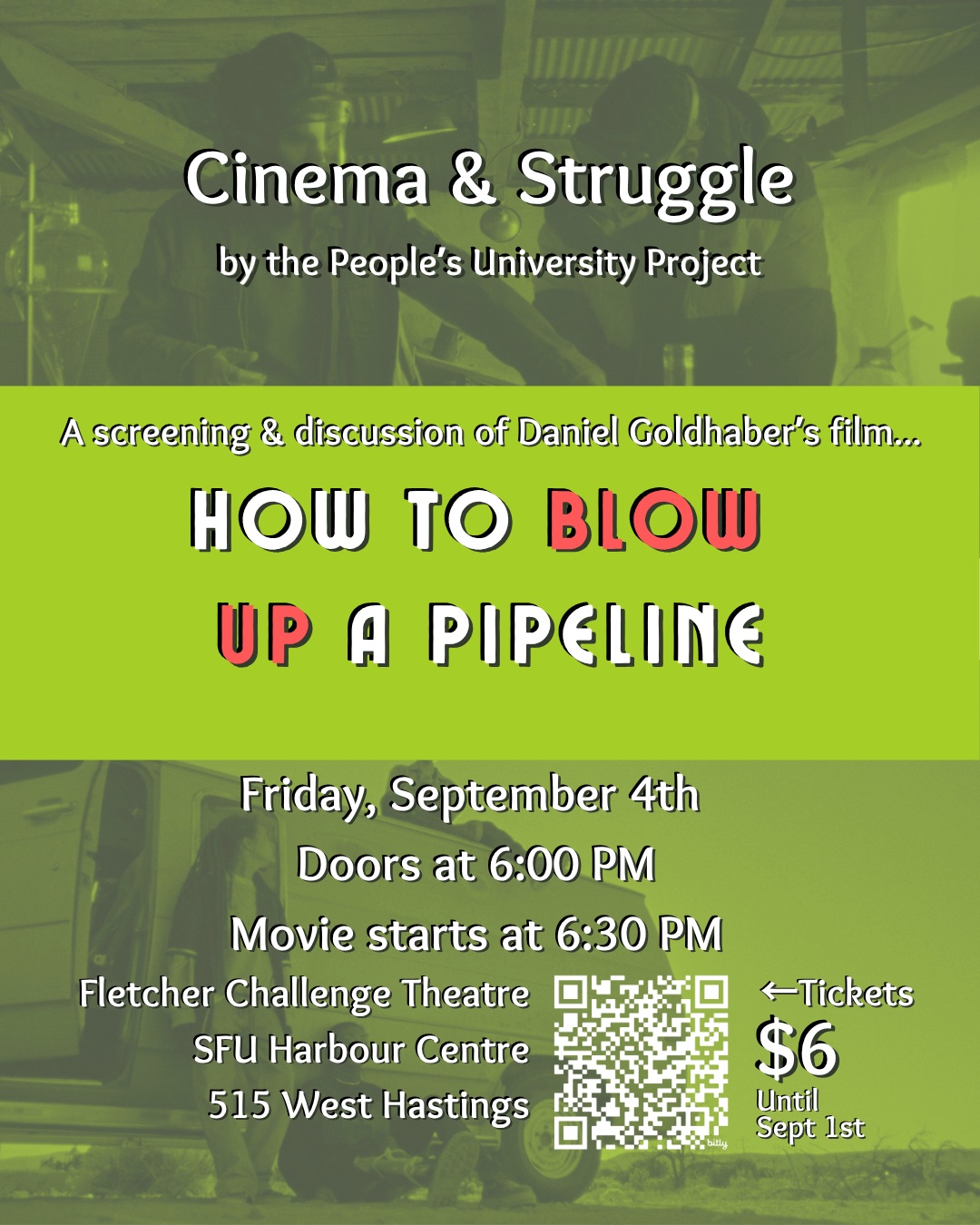
Cinema & Struggle: How to Blow up a Pipeline

04 September 2026, 6 - 9pm, @ SFU Harbour Centre, Fletcher Challenge Theatre

Based on the book of the same name, the film follows a group of youngsters that take extreme actions to address the existing climate crisis. The film brings up important questions about what we should be doing today to address the climate crisis, and we hope to spark a lively discussion after the movie about the topic! Buy tickets while they're still cheap!
Add to calendar
STUDY

Published 24 September 2026

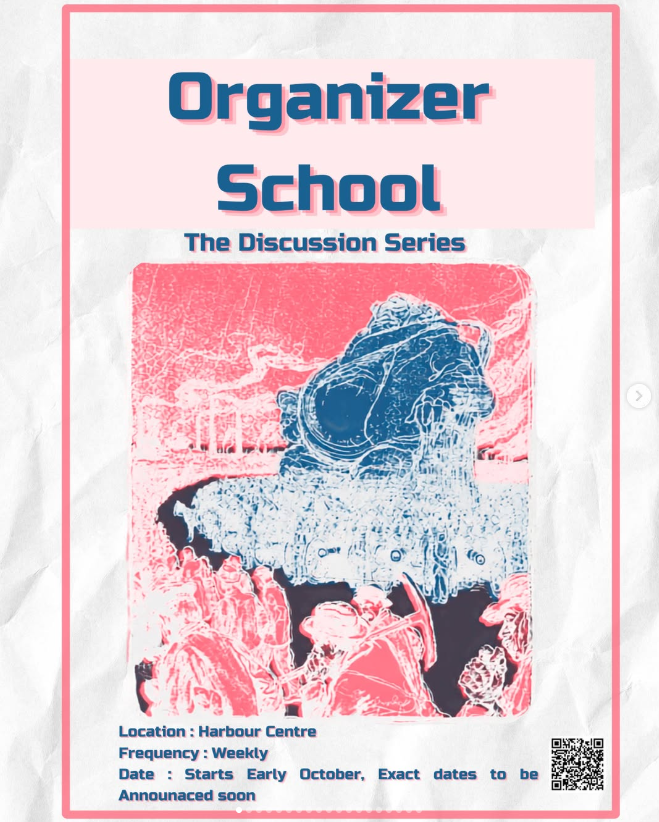
Welcome to Organizer School 2026! Organizer school is aimed at people who are interested in organizing or are already organizing and want to have a critical understanding of the theory, historical practice, strategies and tactics that have been used in organizing. Organizer school also gives you an opportunity to discuss and debate your ideas with other organizers in the city!
Read more here
STUDY

Published 24 September 2026

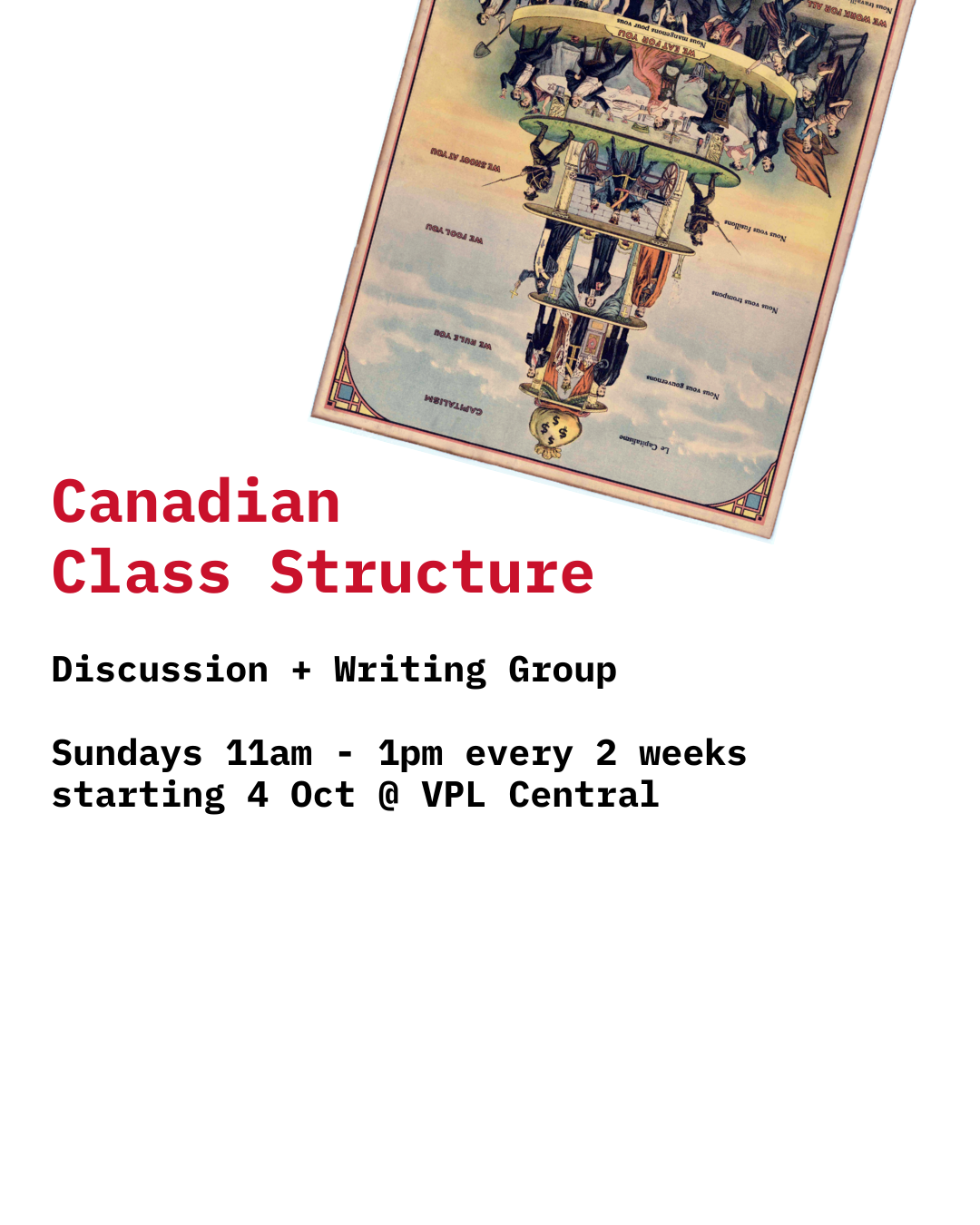
What is class, and who makes up the different classes in Canada? This biweekly discussion and writing group will work through that question together. Every two weeks, we’ll discuss an assigned reading, work through disagreements, ask questions, and apply what we’ve learned in a collaborative writing session. Our goal is to produce a paper on Canada’s class structure. This is an opportunity to put political-economic theory into practice and contribute to a scientific understanding of the balance of forces in our society.
Read more here
PAST EVENT

Published 04 September 2026

Based on the book of the same name, the film follows a group of youngsters that take extreme actions to address the existing climate crisis. The film brings up important questions about what we should be doing today to address the climate crisis, and we hope to spark a lively discussion after the movie about the topic! Buy tickets while they're still cheap!
Read more here
STUDY

Published 24 August 2026

This Summer, the People's University is launching Code Against the Machine, a 13-week course about coding, statistics, and political economy. This summer we'll be developing our understanding of information technology and computer programming vis-a-vis our application of statistical methods to the study of Canada's political economy. The objective of this course is to raise the level of the analysis currently being done by organizers and provide organizers tools to address their concrete problems. This course is beginner-friendly and there is no experience required with respect to coding and statistics. While it's helpful to have studied political economy before, it is not a requirement and we will provide support and a review. The order of the sessions is as follows: Week 1 - The History of Machines Week 2 - Computers Week 3 - Data Structures and Algorithms Week 4 - Statistical Science Week 5 - Data & Variable Construction Week 6 - Descriptive Statistics I Week 7 - Descriptive Statistics II Week 8 - Inferential Statistics & Probability Theory Week 9 - Hypothesis Testing I Week 10 - Hypothesis Testing II Week 11 - Regression Analysis I Week 12 - Regression Analysis II Week 13 - Scientific Communication for the Working Class
Read more here
STUDY

Published 08 August 2026

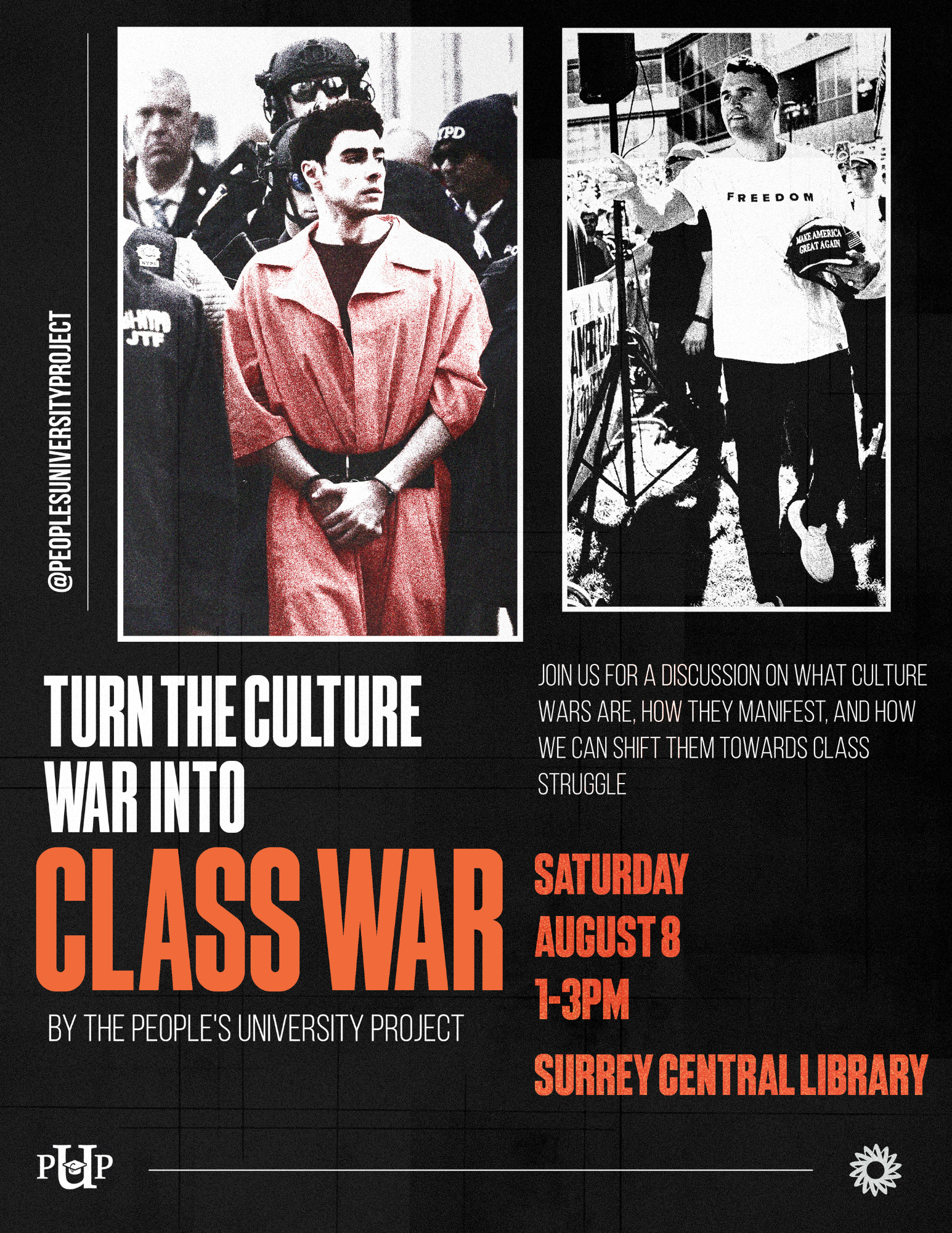
At our next study we will take a look at contemporary "Culture Wars" and discuss the approach we could take towards them. Join us at Surrey Central Library to learn more Location : Surrey Central Library
Read more here
PAST EVENT

Published 07 August 2026

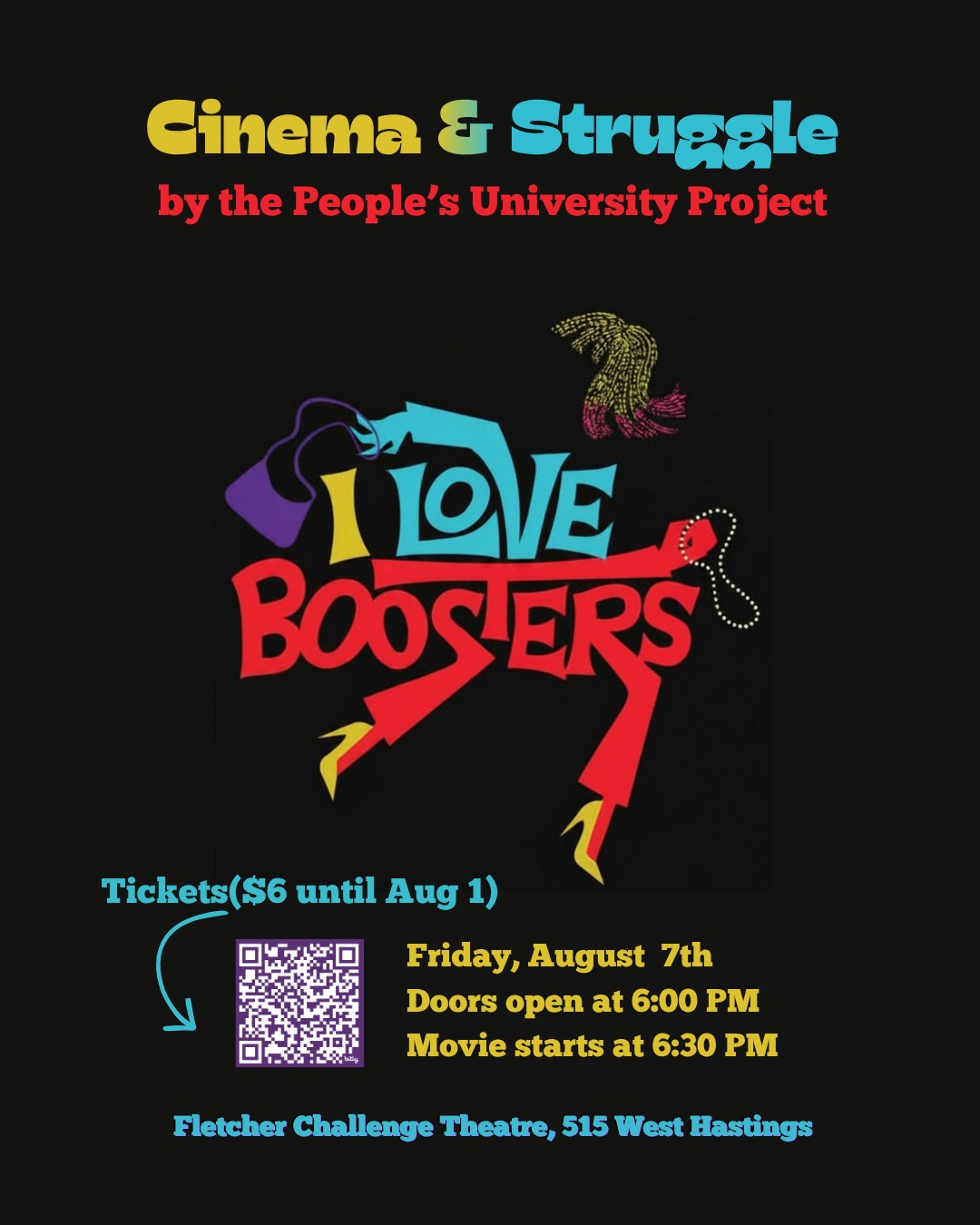
I Love Boosters is a recently released absurdist crime comedy film written and directed by Boots Riley, a famous activist, musician and director. The film follows a group of shoplifters with a passion for fashion. NYT describes it as a "Part anticapitalist satire, part buddy comedy, part heist movie, “I Love Boosters” is a messy, brilliant sendup of the absurd contradictions of our savage era of inequality and political corruption. It asks us: When theft defines a social system, what’s the difference between the individual acts of ordinary people and the collective behavior of the powerful?"
Read more here
STUDY

Published 01 August 2026

This Summer, the People's University is launching Code Against the Machine, a 13-week course about coding, statistics, and political economy. This summer we'll be developing our understanding of information technology and computer programming vis-a-vis our application of statistical methods to the study of Canada's political economy. The objective of this course is to raise the level of the analysis currently being done by organizers and provide organizers tools to address their concrete problems. This course is beginner-friendly and there is no experience required with respect to coding and statistics. While it's helpful to have studied political economy before, it is not a requirement and we will provide support and a review. The order of the sessions is as follows: Week 1 - The History of Machines Week 2 - Computers Week 3 - Data Structures and Algorithms Week 4 - Statistical Science Week 5 - Data & Variable Construction Week 6 - Descriptive Statistics I Week 7 - Descriptive Statistics II Week 8 - Inferential Statistics & Probability Theory Week 9 - Hypothesis Testing I Week 10 - Hypothesis Testing II Week 11 - Regression Analysis I Week 12 - Regression Analysis II Week 13 - Scientific Communication for the Working Class
Read more here
PAST EVENT

Published 03 July 2026

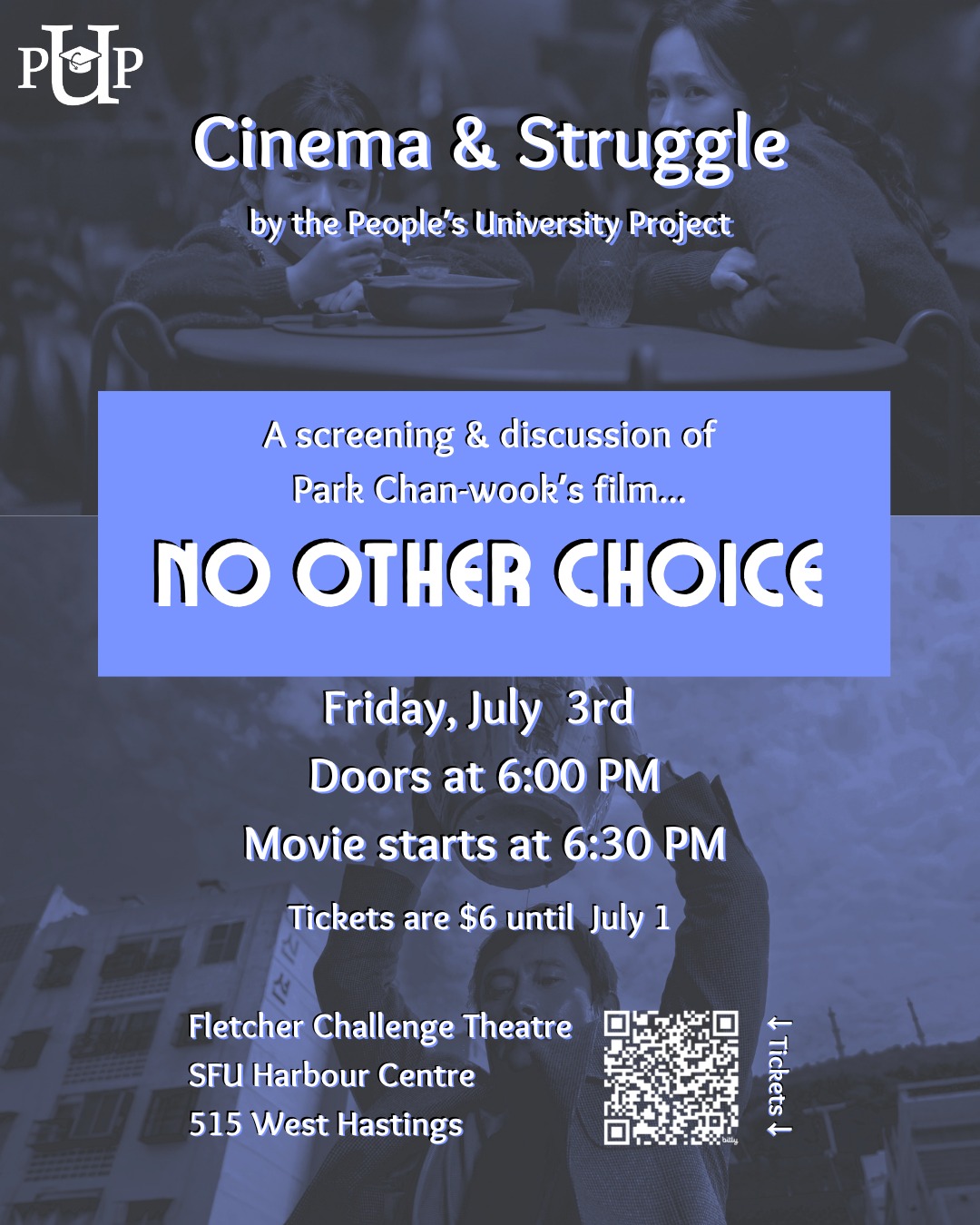
No Other Choice is a 2025 South Korean black comedy thriller film co-written and directed by master filmmaker Park Chan-wook. Based on the 1997 crime novel The Ax by Donald E. Westlake, the movie serves as a biting, anti-capitalist satire of corporate greed, unemployment, and economic anxiety. The story follows You Man-su (played by Squid Game star Lee Byung-hun), a devoted family man who enjoys an idyllic, comfortable middle-class life with his wife, two children, and two dogs. His life is upended when he is unceremoniously laid off from his 25-year career as a middle manager at a pulp manufacturer after the company is taken over.
Read more here
STUDY

Published 29 June 2026

This Summer, the People's University is launching Code Against the Machine, a 13-week course about coding, statistics, and political economy. This summer we'll be developing our understanding of information technology and computer programming vis-a-vis our application of statistical methods to the study of Canada's political economy. The objective of this course is to raise the level of the analysis currently being done by organizers and provide organizers tools to address their concrete problems. This course is beginner-friendly and there is no experience required with respect to coding and statistics. While it's helpful to have studied political economy before, it is not a requirement and we will provide support and a review. The order of the sessions is as follows: Week 1 - The History of Machines Week 2 - Computers Week 3 - Data Structures and Algorithms Week 4 - Statistical Science Week 5 - Data & Variable Construction Week 6 - Descriptive Statistics I Week 7 - Descriptive Statistics II Week 8 - Inferential Statistics & Probability Theory Week 9 - Hypothesis Testing I Week 10 - Hypothesis Testing II Week 11 - Regression Analysis I Week 12 - Regression Analysis II Week 13 - Scientific Communication for the Working Class
Read more here
STUDY

Published 22 June 2026

This Summer, the People's University is launching Code Against the Machine, a 13-week course about coding, statistics, and political economy. This summer we'll be developing our understanding of information technology and computer programming vis-a-vis our application of statistical methods to the study of Canada's political economy. The objective of this course is to raise the level of the analysis currently being done by organizers and provide organizers tools to address their concrete problems. This course is beginner-friendly and there is no experience required with respect to coding and statistics. While it's helpful to have studied political economy before, it is not a requirement and we will provide support and a review. The order of the sessions is as follows: Week 1 - The History of Machines Week 2 - Computers Week 3 - Data Structures and Algorithms Week 4 - Statistical Science Week 5 - Data & Variable Construction Week 6 - Descriptive Statistics I Week 7 - Descriptive Statistics II Week 8 - Inferential Statistics & Probability Theory Week 9 - Hypothesis Testing I Week 10 - Hypothesis Testing II Week 11 - Regression Analysis I Week 12 - Regression Analysis II Week 13 - Scientific Communication for the Working Class
Read more here
STUDY

Published 15 June 2026

This Summer, the People's University is launching Code Against the Machine, a 13-week course about coding, statistics, and political economy. This summer we'll be developing our understanding of information technology and computer programming vis-a-vis our application of statistical methods to the study of Canada's political economy. The objective of this course is to raise the level of the analysis currently being done by organizers and provide organizers tools to address their concrete problems. This course is beginner-friendly and there is no experience required with respect to coding and statistics. While it's helpful to have studied political economy before, it is not a requirement and we will provide support and a review. The order of the sessions is as follows: Week 1 - The History of Machines Week 2 - Computers Week 3 - Data Structures and Algorithms Week 4 - Statistical Science Week 5 - Data & Variable Construction Week 6 - Descriptive Statistics I Week 7 - Descriptive Statistics II Week 8 - Inferential Statistics & Probability Theory Week 9 - Hypothesis Testing I Week 10 - Hypothesis Testing II Week 11 - Regression Analysis I Week 12 - Regression Analysis II Week 13 - Scientific Communication for the Working Class
Read more here
PAST EVENT

Published 05 June 2026

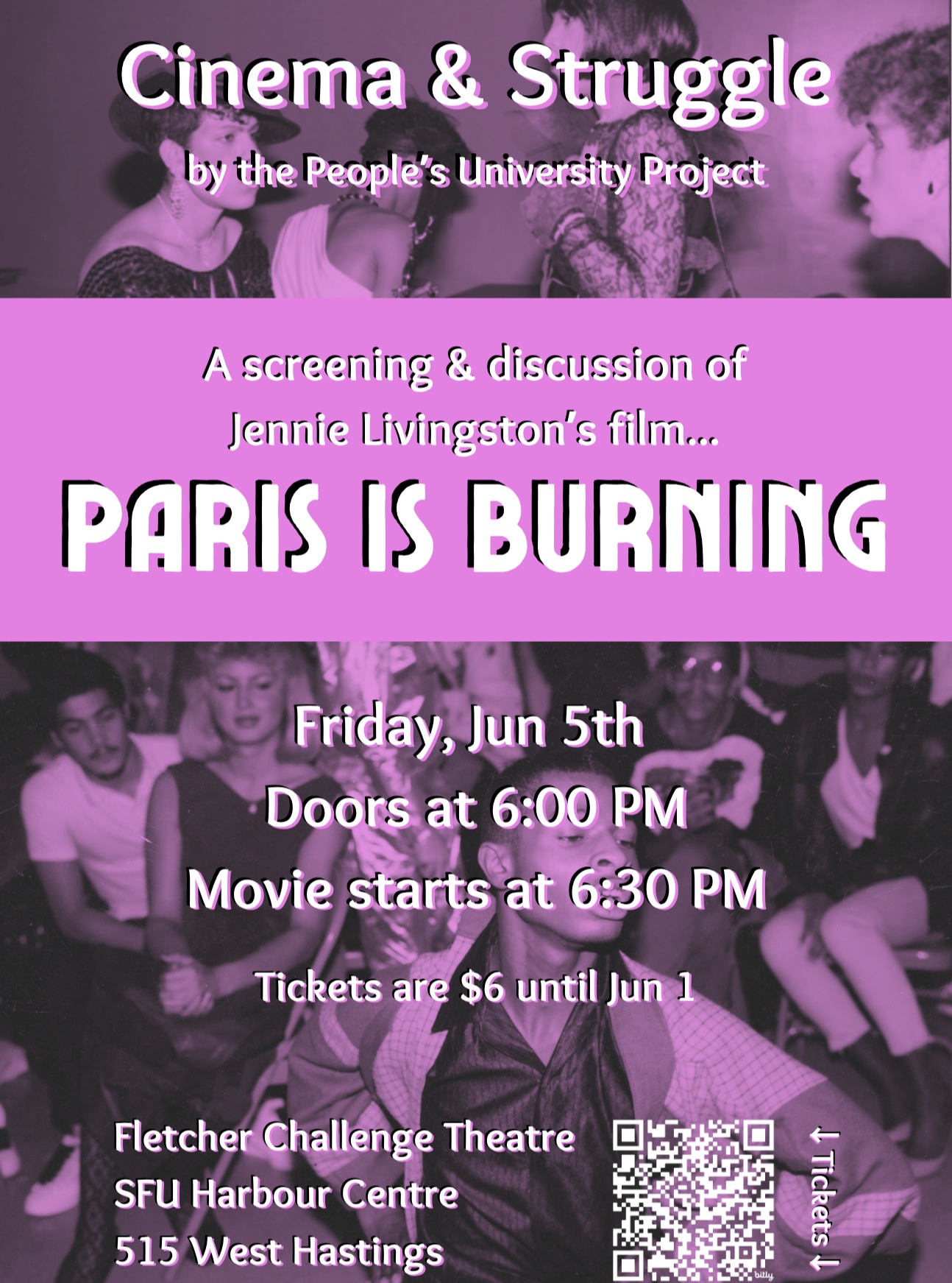
Where does voguing come from, and what, exactly, is throwing shade? This landmark documentary provides a vibrant snapshot of the 1980s through the eyes of New York City’s African American and Latinx Harlem drag-ball scene. Made over seven years, PARIS IS BURNING offers an intimate portrait of rival fashion “houses,” from fierce contests for trophies to house mothers offering sustenance in a world rampant with homophobia, transphobia, racism, AIDS, and poverty. Featuring legendary voguers, drag queens, and trans women — including Willi Ninja, Pepper LaBeija, Dorian Corey, and Venus Xtravaganza.
Read more here
STUDY

Published 03 June 2026

This Summer, the People's University is launching Code Against the Machine, a 13-week course about coding, statistics, and political economy. This summer we'll be developing our understanding of information technology and computer programming vis-a-vis our application of statistical methods to the study of Canada's political economy. The objective of this course is to raise the level of the analysis currently being done by organizers and provide organizers tools to address their concrete problems. This course is beginner-friendly and there is no experience required with respect to coding and statistics. While it's helpful to have studied political economy before, it is not a requirement and we will provide support and a review. The order of the sessions is as follows: Week 1 - The History of Machines Week 2 - Computers Week 3 - Data Structures and Algorithms Week 4 - Statistical Science Week 5 - Data & Variable Construction Week 6 - Descriptive Statistics I Week 7 - Descriptive Statistics II Week 8 - Inferential Statistics & Probability Theory Week 9 - Hypothesis Testing I Week 10 - Hypothesis Testing II Week 11 - Regression Analysis I Week 12 - Regression Analysis II Week 13 - Scientific Communication for the Working Class
Read more here
STUDY

Published 30 May 2026

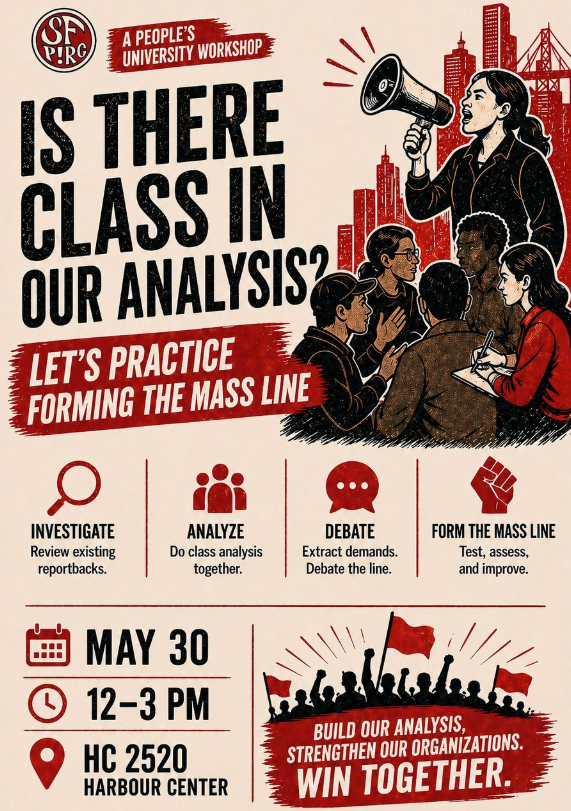
What is class analysis? What is the mass line? In organizing spaces, many organizations say they are practicing the mass line, but we often lack a shared understanding of what it actually means to do so. If we claim to be applying the mass line, we must also commit to the scientific process it requires: reviewing the results of investigation, analyzing conditions through a class lens, extracting demands, forming a mass line, testing it in practice, and assessing its correctness.
Read more here
STUDY

Published 26 May 2026

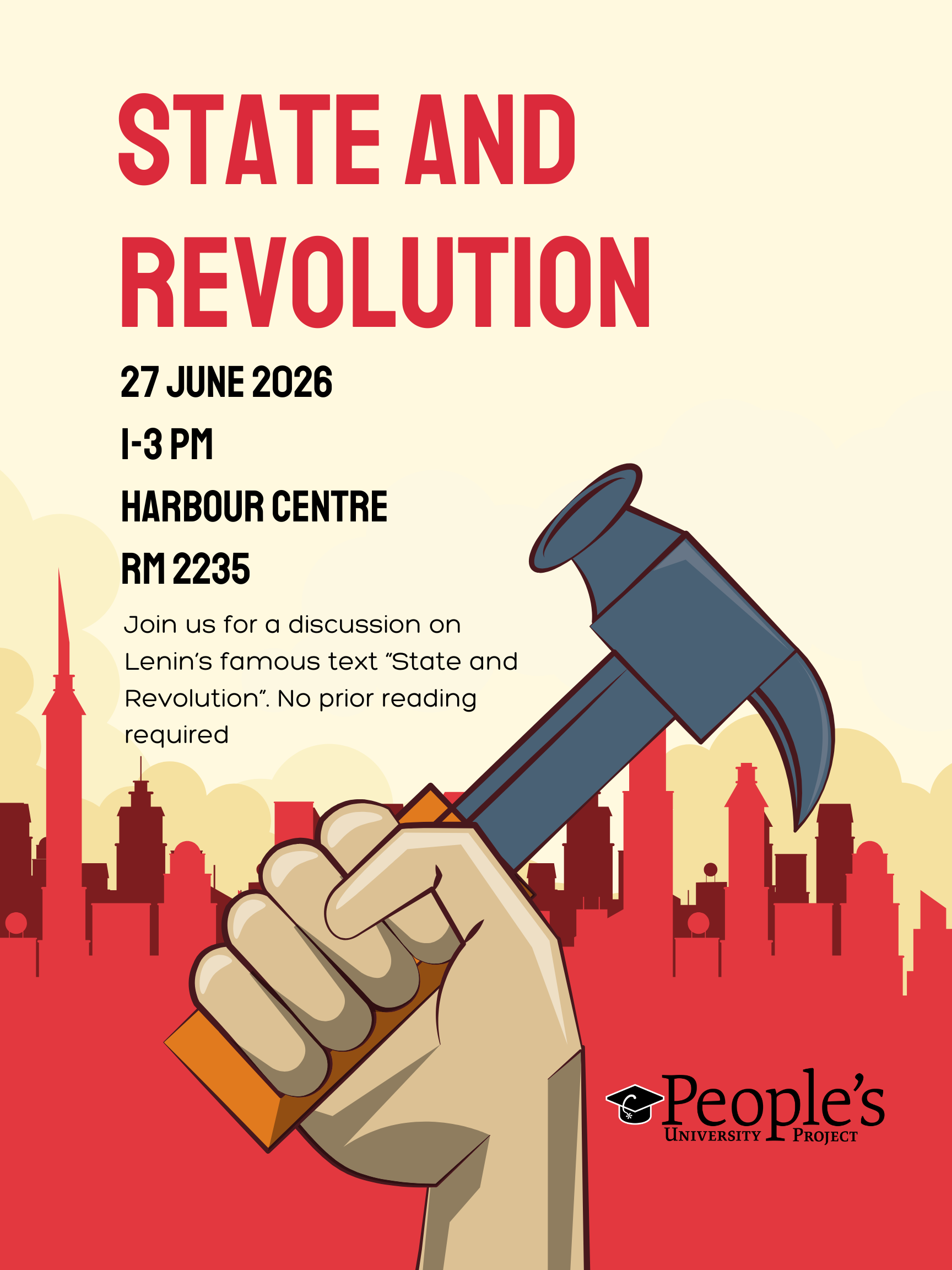
Join us for a discussion on Lenin's "State and Revolution". A text which talks about the seizure of state power and socialist construction. No prior reading is required but we encourage you to read the text and bring your questions and debates! Location : SFU Harbour Centre, RM 2235
Read more here
STUDY

Published 16 May 2026

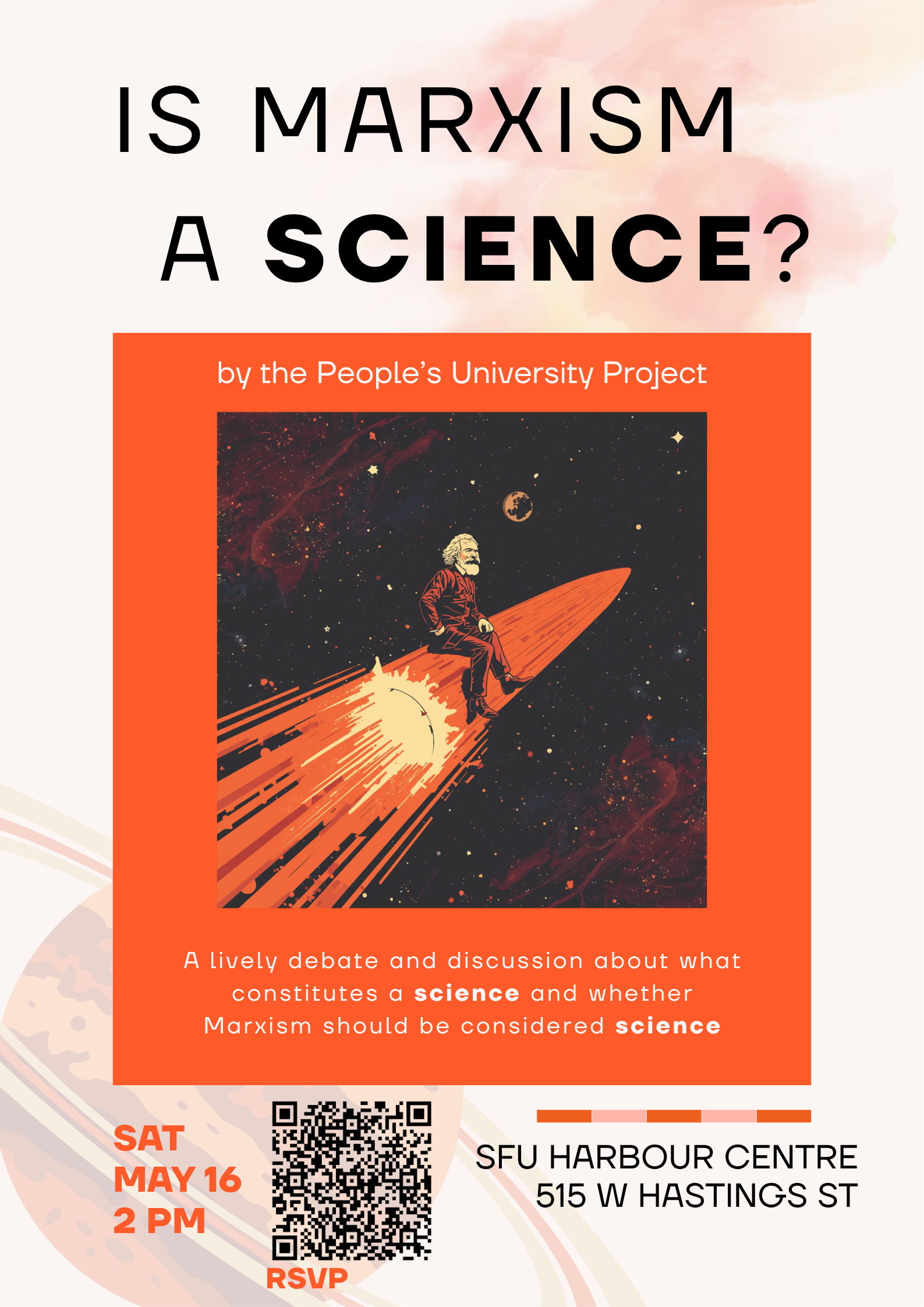
What is a science? In the organizing space, we often talk about science, without having a concrete definition of what makes something scientific. Additionally, we often posit our theories as scientific theories without being able to point to the evidence or the reasons as to why they might be considered scientific. We hope to challenge these assumptions and, through this process, give people more confidence in their application of science to society by discussing and proposing our own ideas of why we consider Marxism to be a science. We hope that Attendants will discuss and debate amongst each other and move towards a more common understanding of what constitutes a science and how it could be applied to the real world.
Read more here
PAST EVENT

Published 01 May 2026

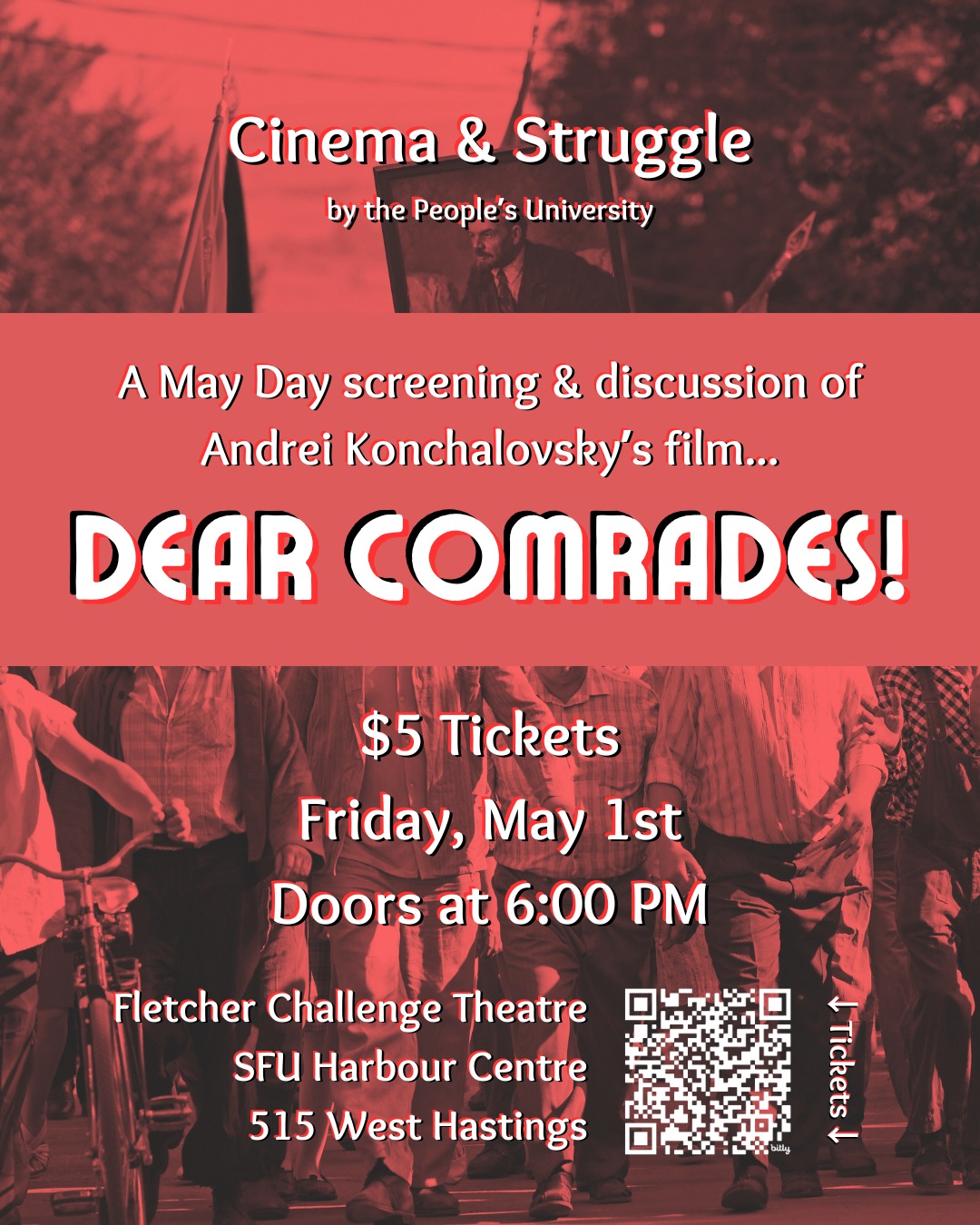
When the communist government raises food prices in 1962, the rebellious workers from the small industrial town of Novocherkassk go on strike. The massacre which then ensues is seen through the eyes of a devout party activist.
Read more here
STUDY

Published 31 March 2026

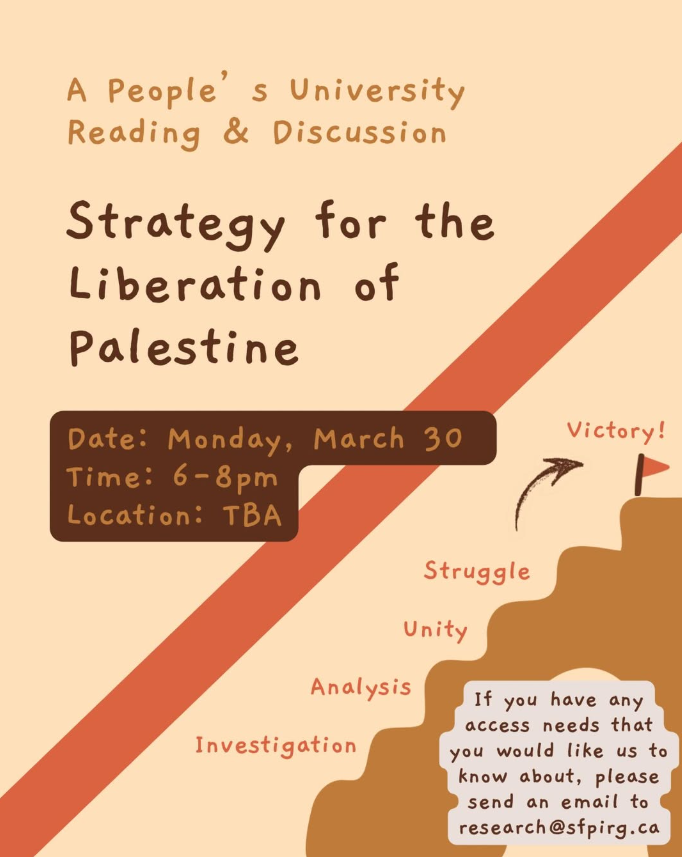
Strategy and tactics go hand in hand, and we need to critically develop both if we’re going to succeed in achieving libration! Join the People’s University crew for a discussion of the book Strategy for the Liberation of Palestine and a reflection on how we can strengthen Palestine liberation work on campuses, in Vancouver, and across the world.
Read more here
STUDY

Published 25 March 2026

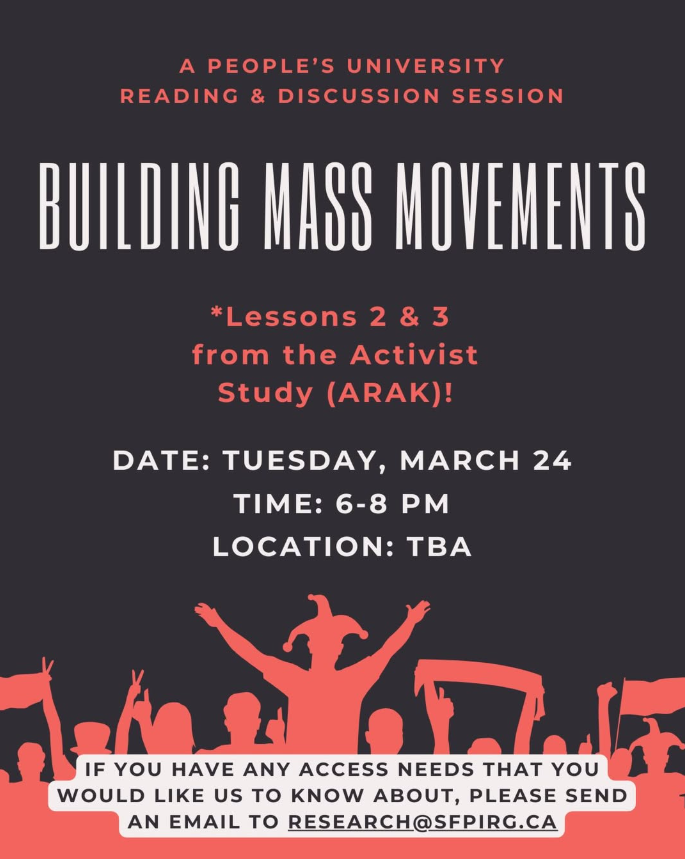
Interested in building genuinely MASS organizations with the power we need to change the our universities, our cities, and our world? Join the People’s University crew for a teach-in historically successful methods of mass movement building and a discussion about how we can implement them today.
Read more here
STUDY

Published 22 January 2026

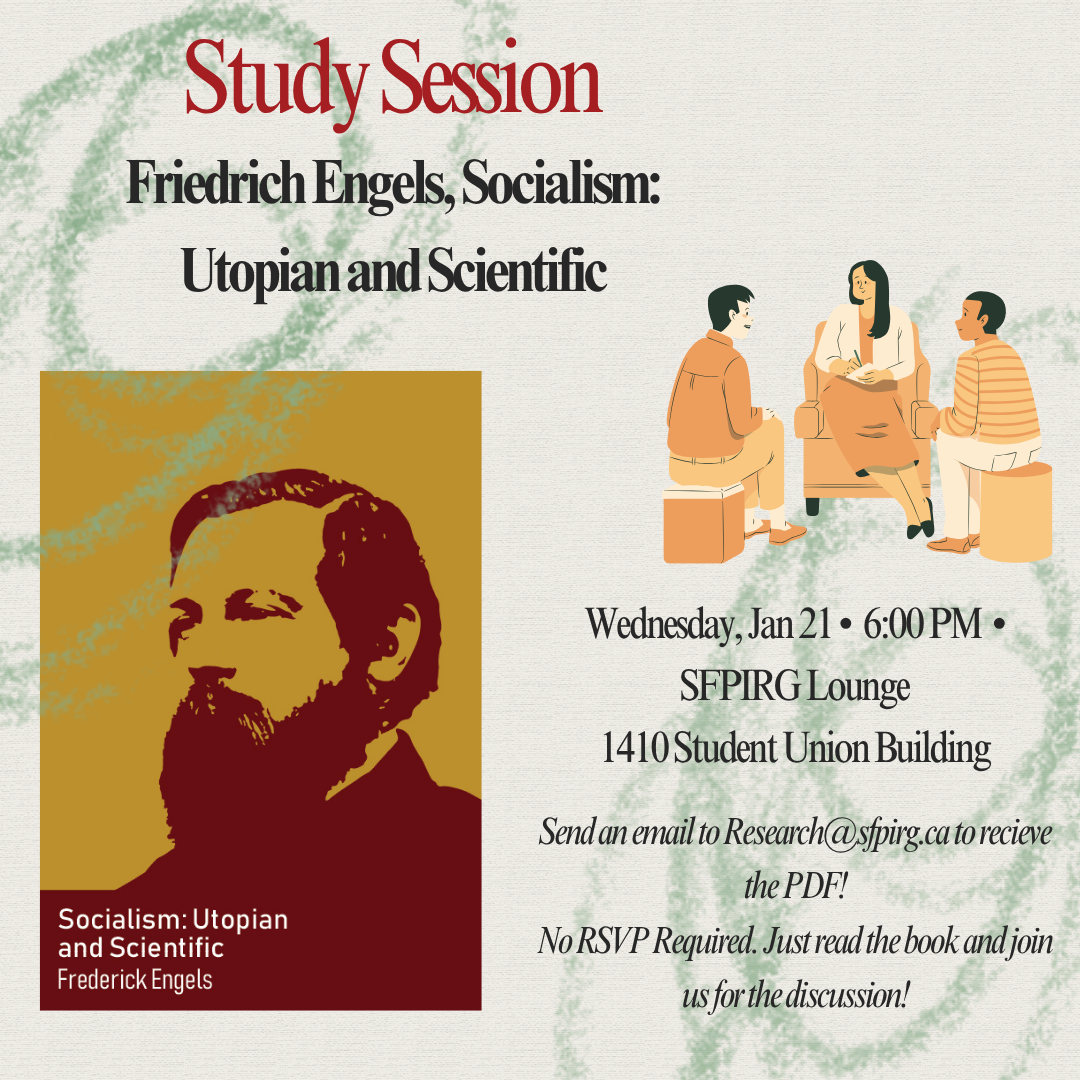
Time to talk socialism! 🗣️During this session we’re going to be discussing a pamphlet written by Friedrich Engels called, “Socialism: Utopian or Scientific.” Top of mind, is the question of what it means to have a scientific understanding and approach to society and history as opposed to a moralistic one?
Read more here
STUDY

Published 28 November 2025

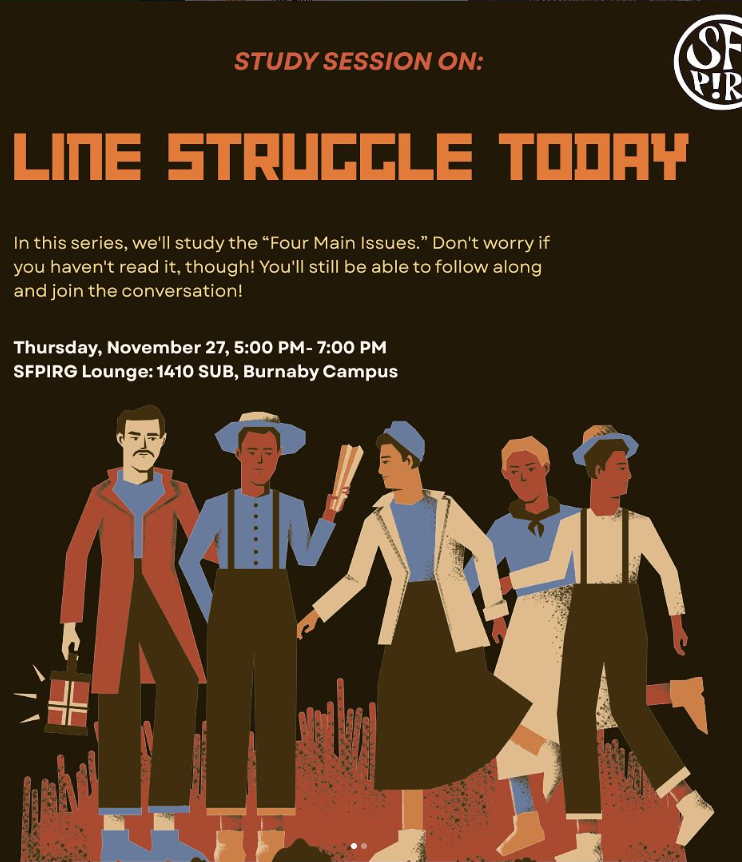
What do we mean when we talk about line struggle, and why does it matter today? Join us for a collective study of the article “Four Main Issues.” We’ll unpack questions of revolutionary strategy, historical lessons from past socialist movements, and what it means to carry forward the movement!
Read more here
STUDY

Published 20 November 2025

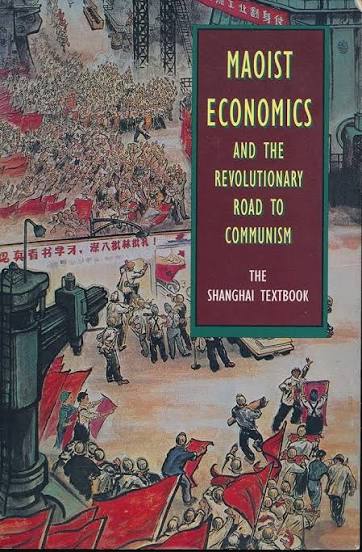
Join us for a collective study of political economy based on the Shanghai Textbook, exploring how capitalist society develops, how exploitation works, and how capitalism produces crisis, inequality, monopoly, and imperialism. Across the series, we’ll move from foundational questions about class society, commodities, value, and surplus value to accumulation, the falling rate of profit, finance capital, imperialism, and the contradictions that shape capitalism today. These sessions are designed as collective study rather than lectures. Short presentations will introduce key ideas from the text, followed by open discussion, exercises, and questions connecting Marxist political economy to contemporary struggles and organizing. Whether you’re new to political economy or looking to deepen your understanding, the goal is to build a shared framework for understanding capitalism—and for thinking more clearly about how it can be transformed.
Read more here
STUDY

Published 13 November 2025

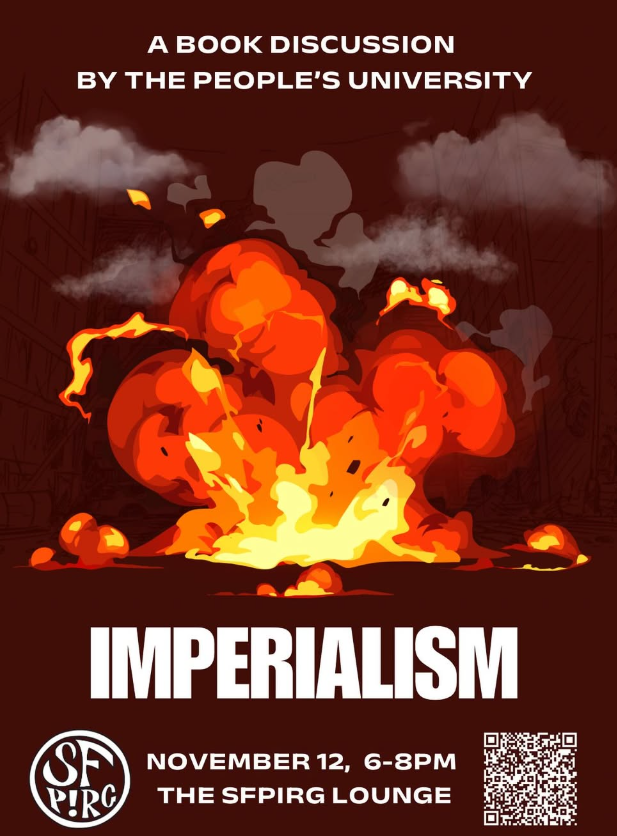
💰⛓️‍💥Down with Imperialism 🗣️💥 During this session we’re going to be discussing a book written by V.I. Lenin titled, Imperialism, the Highest Stage of Capitalism. Themes for this discussion will include the political economy of imperialism (i.e., monopoly capitalism), the nature of inter-imperialist rivalry and competition, the relationship between imperialism and the “labour aristocracy,” and the strategy for the defeat of imperialism.
Read more here
STUDY

Published 25 September 2025

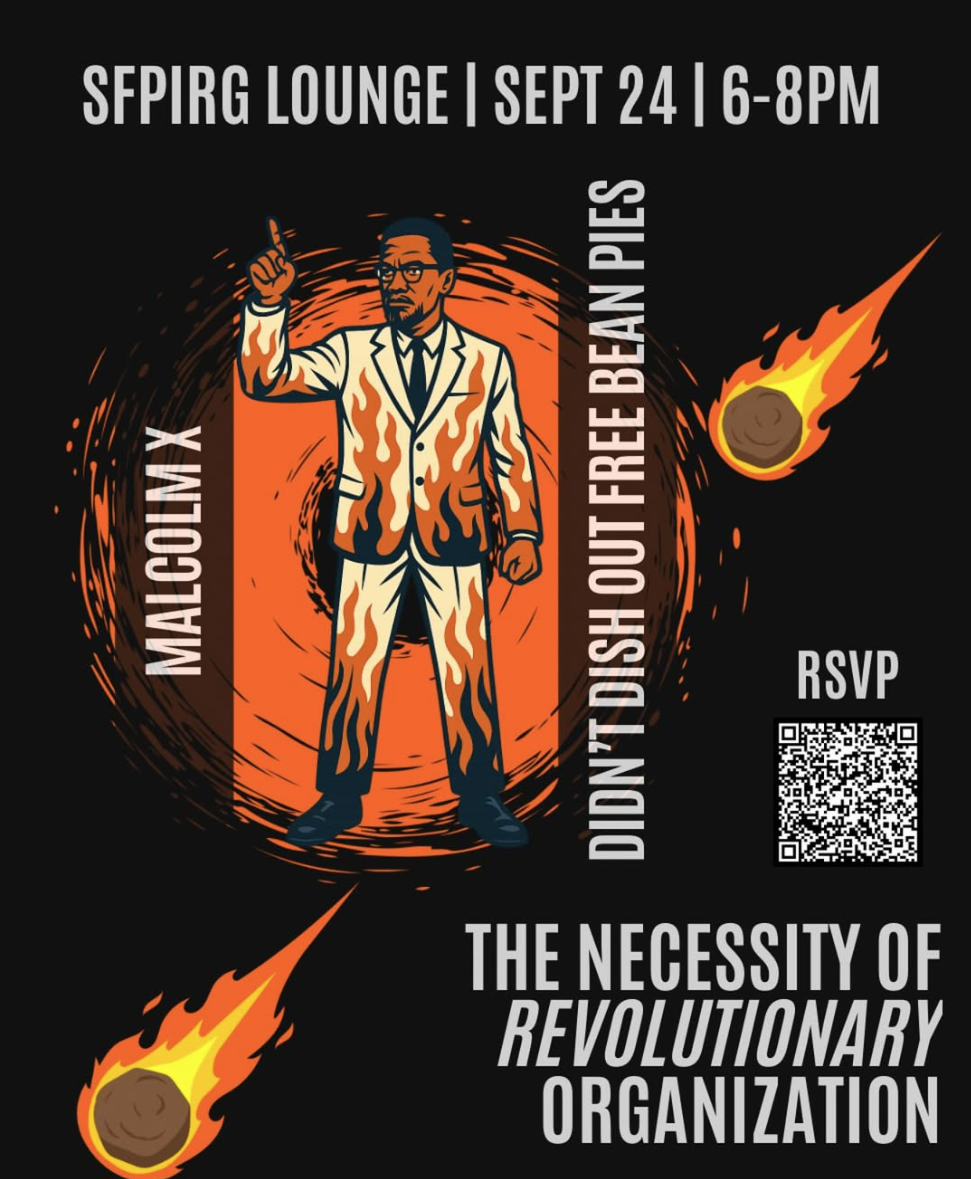
Join us at the SFPIRG for a political education session on the revolutionary organization! We’re going to be learning about the history of the different forms and models of political organization and discussing how these different forms take shape in today’s political environment. In particular, we’ll be looking at an article by Kenny Lake titled, “Malcolm X Didn’t Dish Out Free Bean Pies” and learning about the nature of the mutual aid practices of Black Panther Party.
Read more here
STUDY

Published 04 February 2025

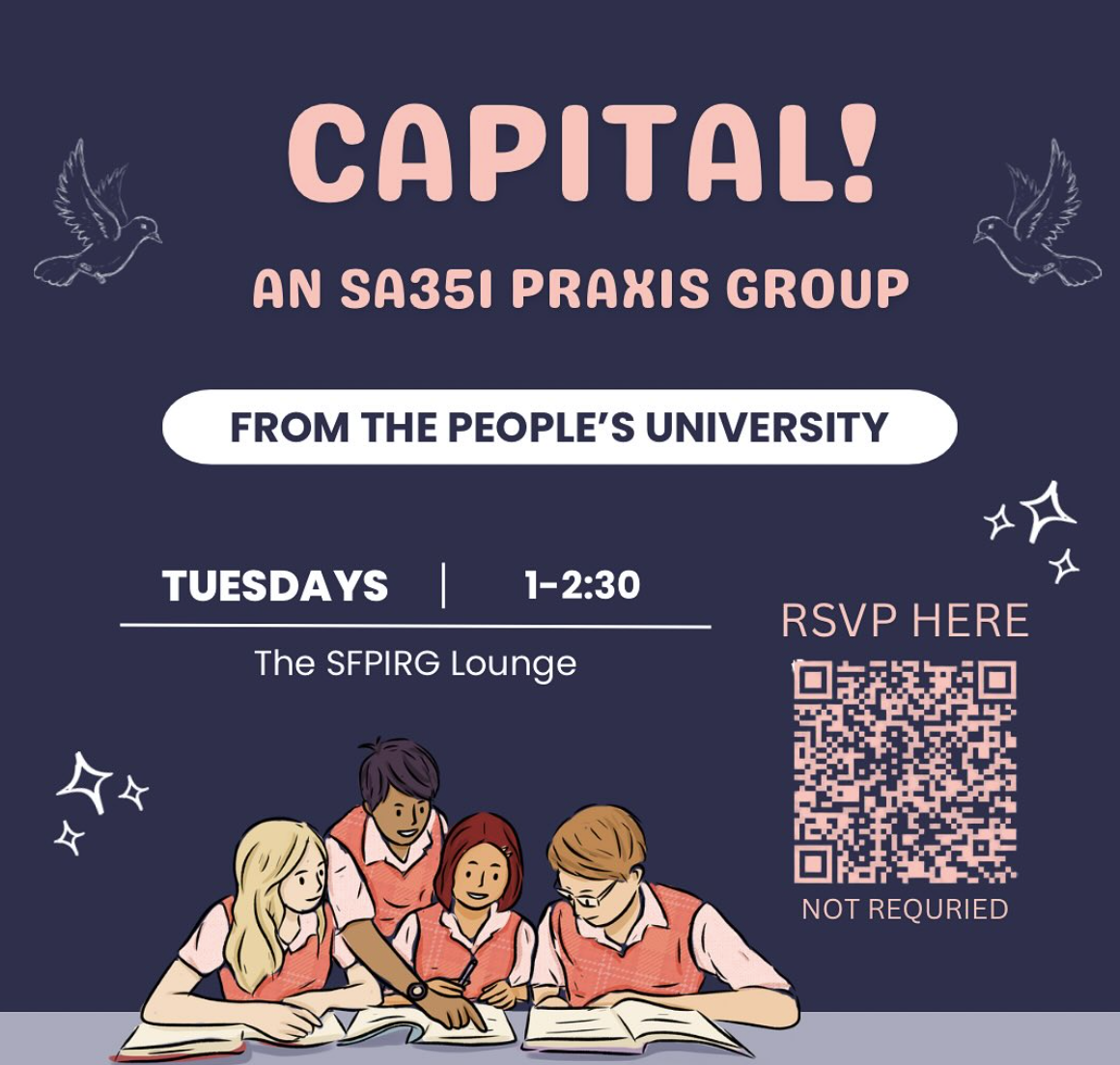
Join us on Tuesdays from 1-2:30pm in the SFPIRG for a discussion of Marx’s Capital, whether you’ve read it or not. Alongside SA351, the People’s University is going to be holding space for folks in the SA351 class as well as other students and community members to have discussions about Marx’s Capital that are grounded in the concrete problems of the local community. We’ll be discussing what the text can teach us about the struggles we’re facing, how the text can meaningfully inform our organizing strategies, and anything else that speaks to folks’ curiosities! This group is inspired by Marx’s final thesis on Feuerbach: “The philosophers have only interpreted the world in various ways; the point is to change it.”
Read more here
STUDY

Published 23 January 2025

How are capitalism, gender, and violence historically entangled? This workshop centers on Silvia Federici’s Caliban and the Witch, examining primitive accumulation, the witch hunts, and the disciplining of women’s bodies as foundational to the rise of capitalism. We’ll trace Federici’s arguments about reproductive labor, enclosure, and the production of gendered social relations, and read the text as both historical analysis and political intervention. Open to those interested in feminist theory, Marxism, and the history of capitalism.
Read more here
STUDY

Published 21 November 2024

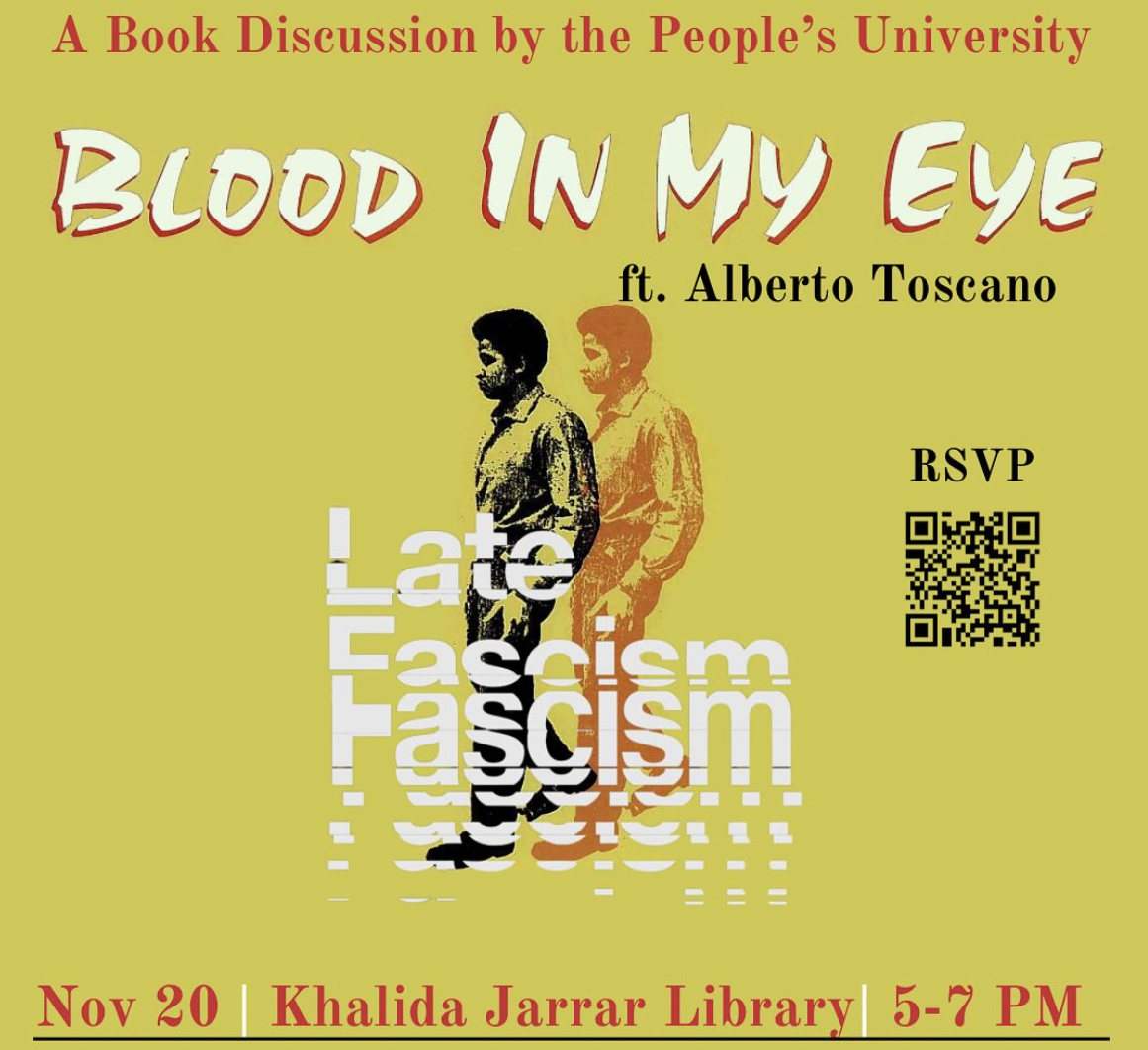
Fascism! Let’s talk about it. Come thru on November 20th from 5-7pm at the Khalida Jarrar Library 📚 We’re gonna be taking a look at two different understandings of the term “fascism” and thinking through their differences and similarities. The first comes from George Jackson, the Field Marshall of the Black Panther Party, in his book Blood in my Eye; the second from SFU faculty member Alberto Toscano in his book Late Fascism. Join us as we dive in and discuss how these ideas can help us build powerful liberation movements! For Blood in my Eye, we’ll be focusing on the sections titled “On Withdrawal” and “Fascism.” For Late Fascism, we’ll be focusing on the second chapter, “Racial Fascism.” We encourage folks to come even if they haven’t gotten a chance to read the texts!
Read more here
STUDY

Published 06 August 2024

This study session uses the history of Palestinian resistance as a case study for thinking more broadly about how people understand and challenge systems of oppression. It begins by introducing a “science of resistance”: the idea that political theories and strategies should be tested against the real historical experiences of oppressed peoples. Participants are introduced to dialectics as a framework for understanding oppression as a struggle between opposing social forces, and are encouraged to connect these ideas to struggles they are involved in themselves.
Read more here
STUDY

Published 31 July 2024

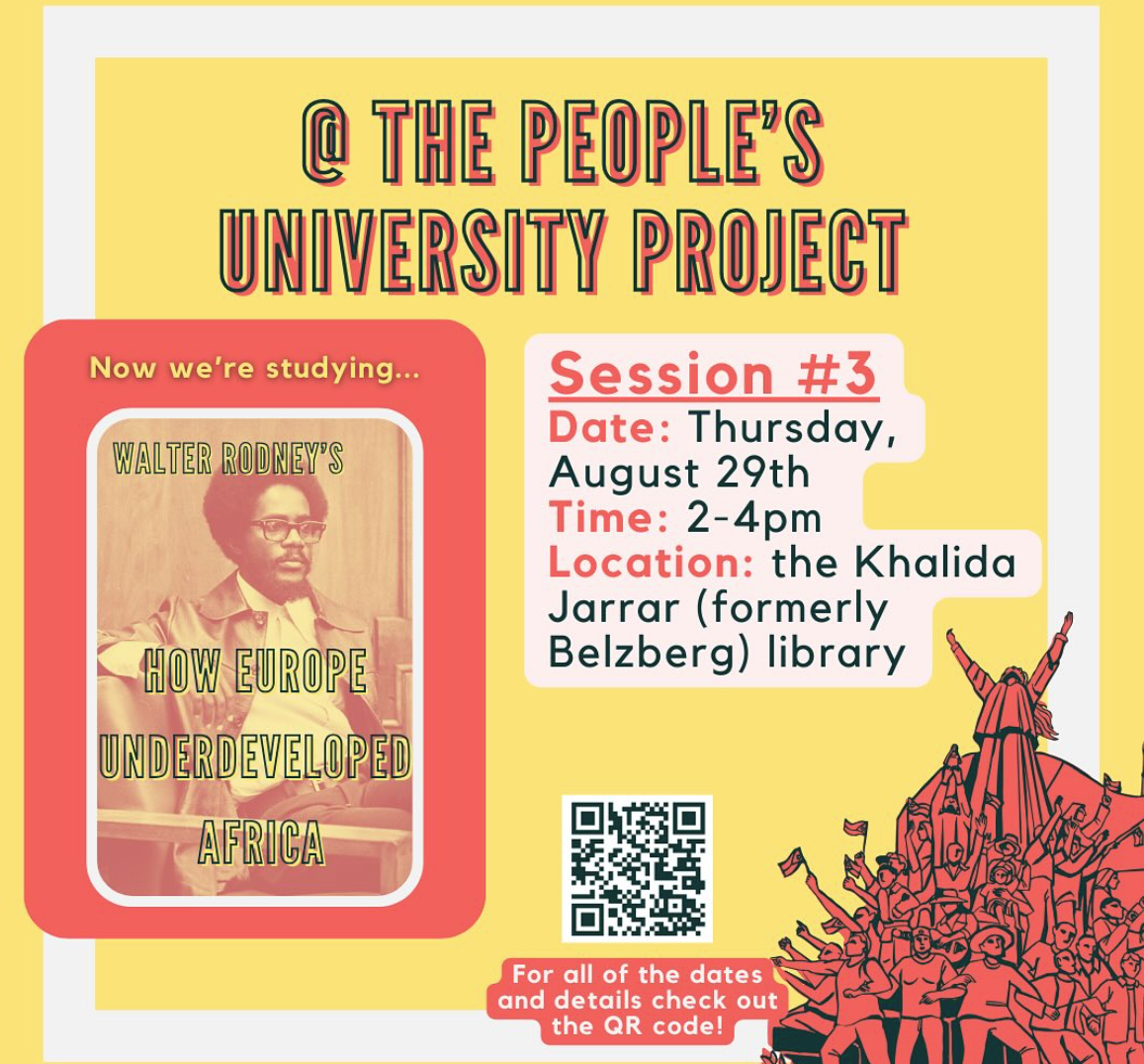
How Europe Underdeveloped Africa is a 1972 book written by Walter Rodney that describes how Africa was deliberately exploited and underdeveloped by European colonial regimes. One of his main arguments throughout the book is that Africa developed Europe at the same rate that Europe underdeveloped Africa. Rodney argues that a combination of power politics and economic exploitation of Africa by Europeans led to the poor state of African political and economic development evident in the late 20th century. Though, he did not intend "to remove the ultimate responsibility for development from the shoulders of Africans... [He believes that] every African has a responsibility to understand the [capitalist] system and work for its overthrow."
Read more here